
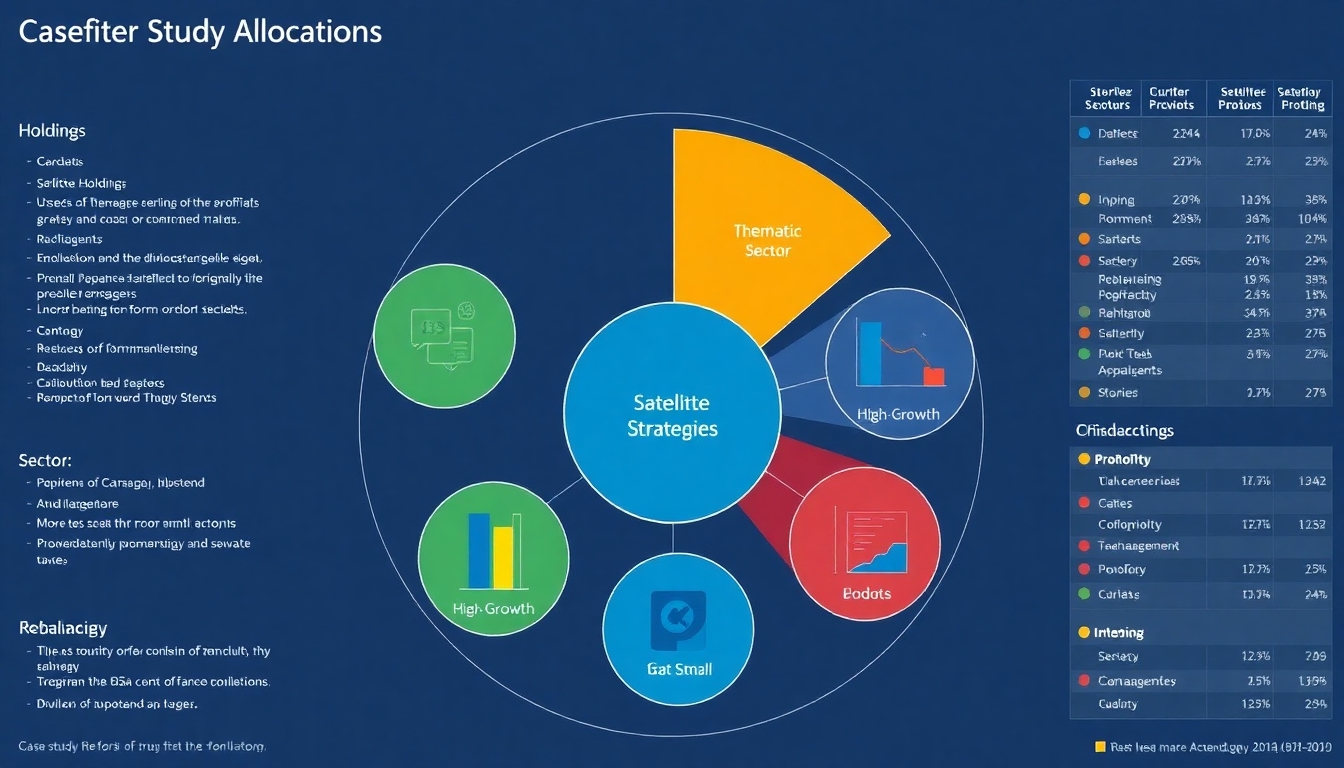
Have you ever felt like you’re walking a tightrope when it comes to investing? Balancing stability with growth can feel like a circus act. That’s where core and satellite investing comes into play. It’s a strategy that blends the best of both worlds. Imagine a sturdy tree trunk with branches reaching out in every direction. The trunk represents your core investments—solid, reliable, and built to weather any storm. Meanwhile, the branches are your satellite investments—dynamic, reaching for the sky, and full of potential.
So, what exactly is core and satellite investing? At its heart, this strategy involves creating a balanced portfolio by combining traditional investments with more innovative choices. The core of your portfolio is made up of low-cost index funds or ETFs that provide a stable foundation. These are your bread and butter, tracking market indices and offering diversification at a minimal cost. On the other hand, the satellite portion is where you can get creative. This is where you can add a splash of color to your investment canvas with thematic, sector-specific, or high-growth picks. It’s like having a trusty old sedan with a turbocharged engine under the hood.
Why opt for this hybrid approach? Well, it’s all about balance. The core provides the stability and predictability that every investor craves. Meanwhile, the satellite investments offer the potential for higher returns, allowing you to reach for those financial stars. It’s a bit like having a safety net while you perform your investment acrobatics. You’re not putting all your eggs in one basket, and that’s a good thing.
In essence, core and satellite investing is about finding that sweet spot between risk and reward. It’s about building a portfolio that’s as unique as you are, tailored to your goals and risk tolerance. So, whether you’re a cautious tortoise or a daring hare, this strategy can help you navigate the investment landscape with confidence. Ready to take the plunge? Your financial future is waiting!
Core vs. Satellite Investments: Definitions and Examples
Have you ever wondered how some investors manage to keep their portfolios stable while still capturing those exciting growth opportunities? The secret might just lie in the core and satellite investing strategy. This approach is like having a solid anchor with a few adventurous sails. But what exactly are core and satellite investments? Let’s dive in.
The core investments are the backbone of your portfolio. Think of them as the sturdy foundation of a house. These are typically low-cost index funds or ETFs that track major market indices. Why? Because they provide stability and broad market exposure. Imagine having a safety net that cushions your portfolio against the wild swings of the market. That’s your core.
On the flip side, we have the satellite investments. These are your risk-takers, your thrill-seekers. They aim to capture higher returns by exploring opportunities beyond the traditional indices. Satellite investments could include thematic funds, sector-specific stocks, or even high-growth companies. Picture them as the cherry on top of your investment sundae—adding flavor and potential for higher returns.
To illustrate, let’s consider an example. Suppose your core portfolio consists of a mix of S&P 500 index funds and international ETFs. These form the bedrock, ensuring steady growth. Now, imagine adding a sprinkle of tech stocks or a dash of renewable energy funds as your satellites. This blend not only diversifies your portfolio but also positions you to benefit from emerging trends.
In essence, core and satellite investing is about striking a balance. It’s about having a reliable base while still keeping an eye on the horizon for new opportunities. So, if you’re looking to enhance your portfolio’s performance, why not give this hybrid approach a try?
How to Choose Low-Cost Index Funds for Your Core Holdings
So, you’re ready to dive into the world of investing, but where do you start? Choosing low-cost index funds for your core holdings is a smart move. Why? Because they offer a solid foundation for your portfolio, much like the sturdy base of a house. But how do you pick the right ones? Let’s break it down.
First things first, understand what you’re getting into. Index funds are like a buffet of stocks, allowing you to sample a bit of everything without committing to just one dish. They track a market index, such as the S&P 500, offering you a taste of the market’s overall performance. The key here is to look for funds with low expense ratios. Think of it as shopping for groceries; you want the best deal without sacrificing quality.
Next, consider diversification. It’s like not putting all your eggs in one basket. By choosing a mix of index funds that cover various sectors, you’re spreading out your risk. This way, if one sector takes a hit, others might still thrive. It’s all about balance.
Now, let’s talk about historical performance. While past performance isn’t a crystal ball for future success, it can give you a hint of what to expect. Look for funds with a consistent track record. It’s like choosing a restaurant with consistently good reviews; you know you’re in for a good meal.
Lastly, don’t forget to check the fund’s size. Larger funds often come with more stability and lower costs. It’s like choosing a well-established brand over a newcomer. You know what you’re getting, and there’s a certain comfort in that.
In conclusion, choosing low-cost index funds for your core holdings is about being smart and strategic. By focusing on cost, diversification, performance, and size, you can build a strong foundation for your investment portfolio. Remember, it’s not about hitting the jackpot overnight; it’s about steady growth over time.