

Value, Growth, Income, Momentum, and Contrarian Investing Strategies Explained
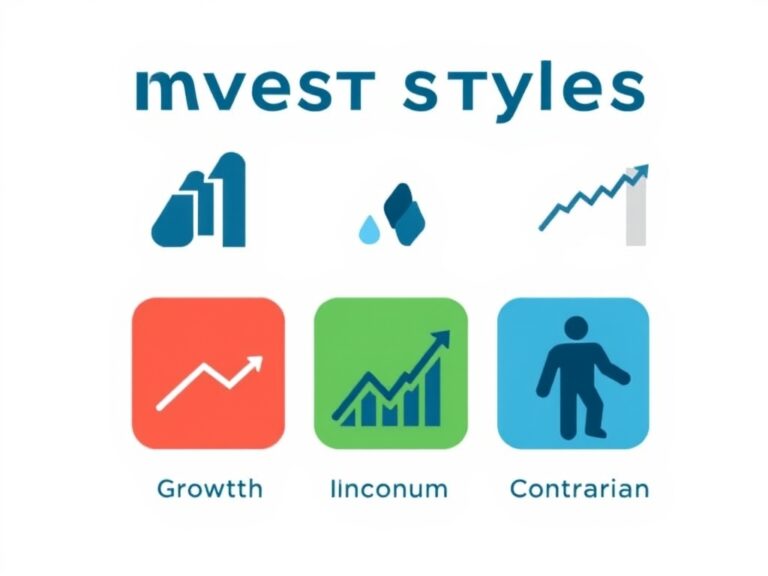
Navigating the stock market can feel like trying to solve a complex puzzle, but understanding core investing strategies is your first step toward financial mastery. Whether you are a beginner or a seasoned pro, knowing how to balance value, growth, income, momentum, and contrarian approaches is essential for building a robust portfolio.
- Value investing focuses on finding undervalued gems.
- Growth investing targets companies with high expansion potential.
- Income investing prioritizes steady dividends.
- Momentum investing rides market trends.
- Contrarian investing bets against the crowd.
By leveraging these distinct methods, you can tailor your risk profile to match your long-term goals. Think of these strategies as tools in a carpenter’s shed; you wouldn’t use a hammer for every single task, and you shouldn’t use just one investment style either. Each approach offers a unique way to analyze company health, market sentiment, and macroeconomic shifts. Mastering these fundamentals allows you to make informed decisions rather than emotional guesses during volatile market cycles. We will dive deep into each, helping you understand when and why to employ them for maximum impact on your wealth accumulation journey. Let’s demystify these strategies so you can start investing with confidence and clarity today.
Let’s start with the classic: Value Investing, a strategy famously championed by legends like Benjamin Graham and Warren Buffett. At its heart, value investing is about hunting for diamonds in the rough—stocks that are trading for less than their intrinsic value.
- Look for a low Price-to-Earnings (P/E) ratio.
- Examine the company’s book value.
- Search for solid, consistent earnings despite temporary negative headlines.
You are essentially shopping for quality assets that the broader market has currently overlooked or mispriced due to short-term fears. This approach requires extreme patience and the ability to ignore the noise of daily market fluctuations. When the market eventually corrects and realizes the true worth of these companies, your patience is rewarded with significant capital appreciation. It is a slow-burn strategy that emphasizes safety margins to protect your downside while waiting for the inevitable market rebound. You must learn to differentiate between a ‘cheap’ stock that is a value play and a ‘value trap’ that is simply failing. Mastering this requires deep fundamental analysis of financial statements and a healthy dose of skepticism regarding current market hype.
If you prefer the thrill of the chase, Growth Investing might be more your speed, focusing on companies that exhibit signs of above-average expansion. These aren’t necessarily companies that are currently profitable in the traditional sense, but businesses that are reinvesting every dollar into innovation and market capture.
- Focus on revenue growth rates.
- Analyze industry disruption potential.
- Evaluate scalability and competitive moats.
Investors here accept higher volatility because they believe the future payoffs from rapid expansion will dwarf current stock price fluctuations. It is a strategy built on optimism and the belief that a disruptive product or service can fundamentally change an entire industry sector. While growth stocks can lead to explosive gains, they also carry the risk of steep drawdowns if earnings reports miss Wall Street expectations. Diversifying across different growth sectors, such as technology or renewable energy, can help manage some of that inherent risk. Always keep an eye on the macroeconomic environment, as high-growth stocks are notoriously sensitive to interest rate hikes and changes in investor risk appetite. If you have a longer time horizon, growth investing can be the primary engine for massive portfolio compounding over decades.

For those who prefer a more passive stream of cash, Income Investing and Momentum Investing serve as tactical counterpoints to growth. Income investors focus on companies with a long history of paying consistent, reliable dividends, which can provide a cushion during market downturns.
- Target Dividend Aristocrats with years of payment history.
- Consider Real Estate Investment Trusts (REITs) for yields.
- Prioritize companies with low debt-to-equity ratios.
Conversely, momentum investing is all about the ‘trend is your friend’ philosophy, buying assets that are already rising and selling them before they peak. It is a highly technical, fast-paced strategy that relies on market psychology and quantitative indicators rather than fundamental business health. You need to be quick, disciplined, and ready to exit positions when the trend loses its steam, often using stop-loss orders to protect your capital. Combining these two—using dividends to build a base and momentum to capture short-term rallies—can create a dynamic and highly effective investment engine. However, both require different skill sets, so it is vital to understand your own temperament before diving into the active, fast-moving world of trend-following strategies.
Finally, we come to the most misunderstood strategy: Contrarian Investing, which involves acting against prevailing market sentiment. A contrarian believes that when the majority of investors are fearful, it is time to buy, and when the crowd is euphoric, it is time to sell.
- Utilize the ‘Fear and Greed’ index for market timing.
- Look for sectors that are hated by analysts.
- Stay calm when the news cycle is overwhelmingly negative.
It takes immense psychological strength to go against the grain, especially when the media is broadcasting doom and gloom. True contrarians thrive during market panics, treating broad-based sell-offs as clearance sales for high-quality assets. By ignoring herd mentality, you avoid the trap of buying at the top and selling at the bottom, which is where most retail investors lose money. It is not about being a rebel for the sake of it, but about applying rigorous logic when others are caught in emotional cycles. Combining these five strategies—value, growth, income, momentum, and contrarian—allows you to build a diversified portfolio that can withstand any market environment. Keep learning, stay patient, and remember that consistent success comes from disciplined execution of your chosen plan. Happy investing!