
Value, Growth, Income, Momentum, Contrarian Investing: Finding Your Optimal Approach
Ever felt like the stock market is just a giant buffet where you don’t know which plate to pick first? Choosing an investment style is essentially deciding on your personal “flavor” of wealth building, and it’s the most important step toward long-term success. Whether you are a cautious saver or a thrill-seeking trader, understanding strategies like Value, Growth, Income, Momentum, and Contrarian investing will help you navigate the noise. Each approach comes with its own set of rules, risks, and rewards that can drastically change your portfolio’s performance. It’s not just about picking stocks; it’s about aligning your financial goals with a methodology that resonates with your risk tolerance. In this guide, we will break down these five pillars of the investing world so you can find your optimal approach. 🚀 To get started, you must realize that no single style is “the best” for everyone at all times. Instead, the market cycles through phases where different strategies shine more brightly than others. By the end of this post, you’ll have a clearer vision of where your capital belongs and how to deploy it effectively. Let’s dive into the core differences between being a bargain hunter and a visionary. Understanding these fundamentals will give you the confidence to ignore daily market fluctuations. Your journey to financial freedom starts with knowing exactly what kind of investor you want to be.

The Battle of Philosophies: Value vs. Growth
Let’s start with the two heavyweights: Value and Growth investing, which often represent opposite ends of the fundamental spectrum. Value investors are like the “thrifty shoppers” of the financial world, looking for stocks that are trading for less than their intrinsic worth. 🕵️♂️ They focus on metrics like low Price-to-Earnings (P/E) ratios and high dividend yields to find hidden gems the market has overlooked. On the other hand, Growth investing is all about the future, focusing on companies expected to grow at an above-average rate compared to the rest of the market. These companies often reinvest their earnings to expand, meaning they rarely pay dividends but offer high capital appreciation potential. You might find a value play in a steady utility company, whereas a growth play is usually found in a disruptive tech startup. Both require a different mindset; value demands patience during stagnation, while growth requires a stomach for price swings. Understanding which one fits your personality is crucial because trying to be a value investor in a growth-driven market can be frustrating. Ultimately, your choice depends on whether you prefer “buying a dollar for eighty cents” or “buying a seed that could become a giant oak tree.” Some investors prefer the safety of tangible assets and current earnings found in value. Others are willing to pay a premium for the explosive potential of innovation and scale. This choice often dictates how much volatility you will face in your monthly brokerage statements.
- Value Focus: Safety margins, undervalued assets, and long-term patience.
- Growth Focus: Innovation, market share expansion, and high volatility.

Generating Cash and Riding Waves: Income vs. Momentum
Moving along the spectrum, we encounter Income and Momentum investing, which cater to very different types of financial needs. Income investing is the ultimate goal for many retirees or those seeking “passive income,” as it focuses on generating steady cash flow through dividends or interest. 💰 This strategy prioritizes stability and consistent payouts over aggressive price growth, making it a favorite for risk-averse individuals. Contrastingly, Momentum investing is the “surfer” strategy, where investors buy assets that are already trending upward, betting that the trend will continue. It relies heavily on technical analysis and market psychology, as the goal is to “buy high and sell higher.” While income investing feels like a slow and steady walk, momentum investing can feel like a high-speed chase. Success in momentum requires strict discipline to exit positions before the trend reverses, which can happen suddenly. Income seekers, however, often ignore short-term price drops as long as the dividend checks keep clearing. Deciding between these two depends on whether you need money *now* or if you are trying to capture the market’s current “hot hand.” Both can be incredibly lucrative if executed with a clear set of rules and exit strategies. Many people use income strategies to build a “floor” for their lifestyle expenses. Meanwhile, momentum traders look for the “ceiling” to push their capital gains to the limit.
- Income Strategy: High-yield bonds, REITs, and Dividend Aristocrats.
- Momentum Strategy: Relative strength index (RSI), moving averages, and trend following.

The Contrarian Edge and Finding Your Path
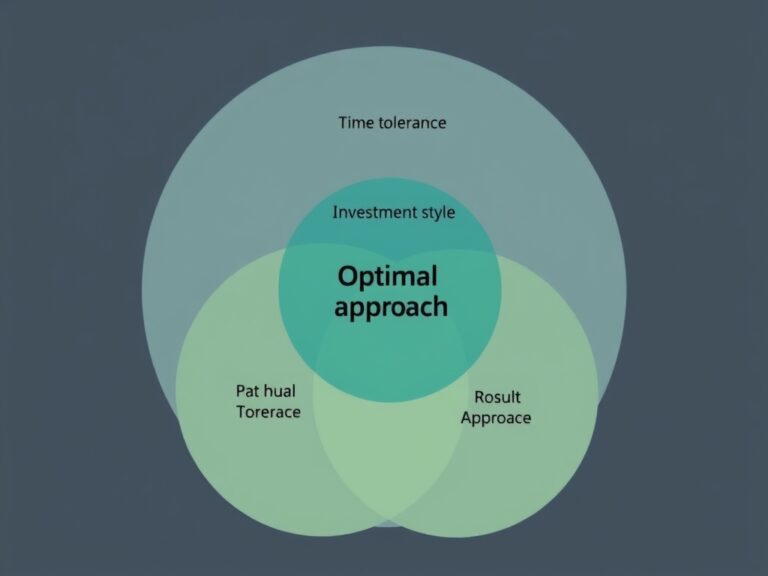
Finally, we have the Contrarian investing approach, which is arguably the most psychologically challenging path to follow. Contrarians thrive on the mantra of “buying when there’s blood in the streets,” deliberately going against prevailing market trends and sentiments. 📉 When everyone is panicking and selling, the contrarian is looking for entry points; when the masses are euphoric, they are looking for the exit. This requires an immense amount of conviction and the ability to be “wrong” for a long time before the market eventually agrees with you. To find your optimal investment approach, you must evaluate your personal timeline, emotional resilience, and financial objectives. You don’t have to stick to just one style; many successful investors use a “core and satellite” approach, combining several strategies. For instance, you might keep 70% of your funds in a Value-Income core and 30% in Growth-Momentum satellites. The key is to avoid “style drift,” where you abandon your strategy at the worst possible time due to fear or greed. By mastering the nuances of these five styles, you position yourself to build a portfolio that truly serves your life goals. Remember, the best strategy is the one you can actually stick to during the toughest market conditions. Take some time today to review your current holdings and see which style they most closely align with. Your future self will thank you for the clarity and discipline you establish right now.
- Step 1: Assess your risk tolerance—can you handle a 30% drop?
- Step 2: Define your time horizon—are you investing for 3 years or 30?
- Step 3: Determine your involvement—how much time can you commit?