
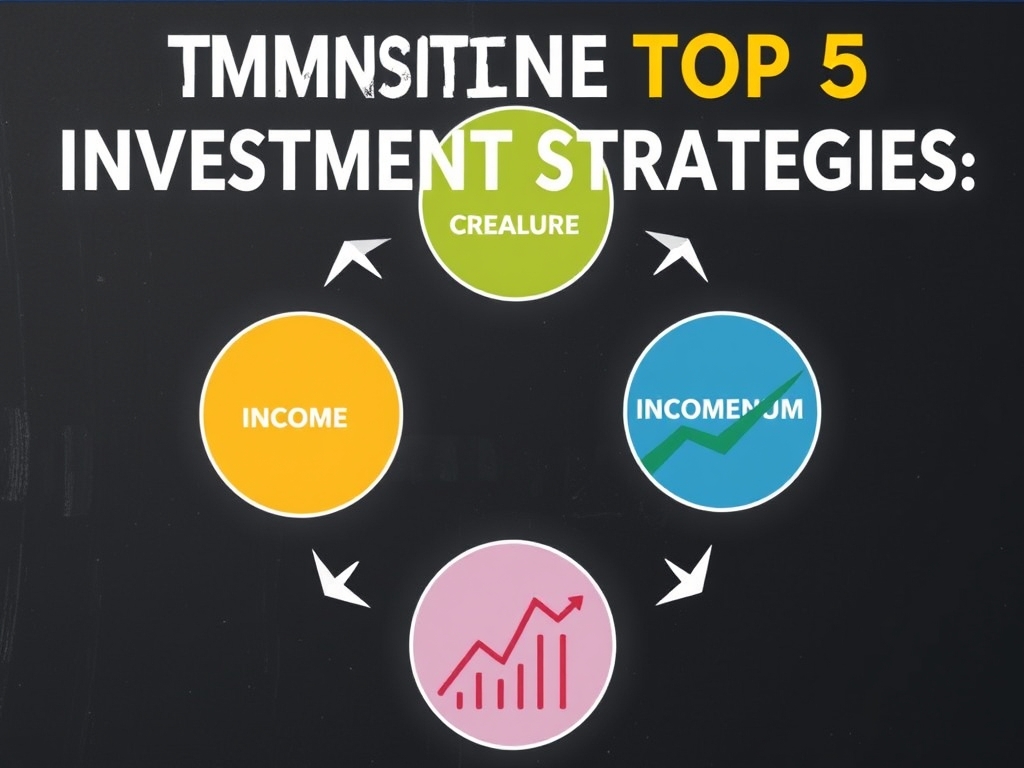
Comparing the Top 5 Investment Strategies: Value, Growth, Income, Momentum, and Contrarian Investing
1. Finding Gems with Value Investing
Welcome to the exciting world of wealth building, where choosing the right strategy is like picking the perfect engine for your financial vehicle. 🚗 Today, we are diving deep into the Top 5 Investment Strategies to help you navigate the markets with confidence. Let’s kick things off with Value Investing, the classic approach popularized by legends like Warren Buffett. This strategy is all about finding “diamonds in the rough” or stocks that the market has undervalued for various reasons. 💎 You are essentially looking for a bargain, buying shares for less than their intrinsic worth. To succeed here, you need a keen eye for fundamental analysis, looking at price-to-earnings (P/E) ratios and book values. It requires immense patience because the market might take years to realize a company’s true value. 🐛 Many value investors look for established companies with solid track records and temporary setbacks. By focusing on the margin of safety, you minimize your downside risk while waiting for the eventual price correction. This method is often seen as a low-volatility path to long-term wealth, though it can feel slow during bull markets. Understanding balance sheets is crucial here, as you want to ensure the company is financially sound. 📊 Ultimately, value investing is about discipline and the belief that price and value eventually converge. If you are starting out, keep an eye on these key indicators:
- Low P/E Ratios
- High Dividend Yields
- Low Price-to-Book Ratios

2. Riding the Wave of Growth Investing
On the flip side of the coin, we have Growth Investing, which acts as the high-octane fuel of the stock market. 🚀 While value investors look for deals, growth investors search for the next big thing—companies expected to grow at an above-average rate compared to the rest of the market. These businesses often reinvest all their profits back into research and development rather than paying dividends. Think of the tech giants and innovative startups that disrupt entire industries; that’s where growth investors thrive. 💡 You are paying a premium today because you believe the future earnings will be astronomical. This strategy often involves higher volatility, as these stocks can be sensitive to interest rate changes and market sentiment. 📈 It requires a visionary mindset and the ability to tolerate significant price swings in the short term. Key metrics to watch include year-over-year revenue growth and market share expansion. 📉 Investors in this category are less concerned with the current P/E ratio and more focused on the forward-looking potential. It is a thrilling way to participate in the evolution of the global economy, but it demands a higher risk appetite. To identify a high-potential growth stock, look for:
- High Earnings Per Share (EPS) growth
- Innovative product pipelines
- Expanding target markets

3. Generating Steady Wealth via Income Investing
If you prefer a more predictable and steady stream of wealth, Income Investing might be your bread and butter. 🍞 This strategy focuses on assets that generate regular cash flow, such as dividend-paying stocks, Real Estate Investment Trusts (REITs), and corporate or government bonds. It is a favorite among retirees and those looking to supplement their monthly earnings without selling off their principal assets. 💰 The goal here isn’t necessarily massive capital appreciation—though that can happen—but rather the reliability of the payout. 🏦 You should look for “Dividend Aristocrats,” which are companies that have increased their payouts for at least 25 consecutive years. This approach provides a psychological safety net, as you see tangible returns regardless of whether the market is up or down. ☔ It’s important to evaluate the payout ratio to ensure the company can actually afford its dividends in the long run. Income investing turns your portfolio into a personal ATM, providing financial freedom through passive income. 🏖 It requires a focus on stability and the long-term health of the cash-generating entities. Diversifying across different sectors like utilities and consumer staples is often a core part of this plan. Common income-focused assets include:
- Dividend-paying Stocks
- Real Estate Investment Trusts (REITs)
- Preferred Stocks and Bonds

4. Momentum and Contrarian: Timing the Psychology
Now, let’s talk about two strategies that rely heavily on market psychology: Momentum and Contrarian Investing. 🌪 Momentum investing is the “trend is your friend” approach, where you buy assets that have been performing well and sell them once they start to lose steam. It’s based on the idea that winners keep winning in the short term due to investor herd behavior. 🐎 On the complete opposite end of the spectrum, Contrarian Investing involves going against the grain—buying when others are fearful and selling when others are greedy. 📉 It takes a lot of emotional fortitude to buy a stock that everyone else is dumping, but that is exactly where the biggest opportunities often hide. While momentum investors ride the wave of popular sentiment, contrarians look for the turning points where sentiment has become overly pessimistic. 🔄 Both strategies require active management and a deep understanding of technical indicators and market cycles. You aren’t just looking at the company; you are looking at the psychology of the crowd. 🧠 Momentum can lead to massive gains in trending markets, while contrarianism can capture huge rebounds from market bottoms. Mastering either requires a strict exit strategy to avoid being caught on the wrong side of a trend shift. Consider these technical aspects:
- Relative Strength Index (RSI) for momentum
- Sentiment indicators for contrarians
- Volume analysis for trend confirmation

Conclusion: Finding Your Perfect Strategy
Choosing between these strategies isn’t a “one size fits all” decision; it depends entirely on your personal goals, risk tolerance, and time horizon. 🎯 For many, a hybrid approach that blends elements of value, growth, and income provides the most balanced portfolio. You might keep a core of income-generating stocks for stability, while allocating a portion to high-growth tech stocks for upside potential. ⚖ It is essential to conduct regular portfolio rebalancing to ensure your asset allocation hasn’t drifted too far from your original plan. 🛠 Always remember that diversification is the only “free lunch” in investing, helping you mitigate the specific risks of any single strategy. 🥗 Stay educated and keep a long-term perspective, as the “noise” of daily market fluctuations can often distract you from your ultimate financial destination. 🛣 Whether you are a conservative income seeker or an aggressive momentum trader, consistency is the key to success. 🗝 Take the time to understand your own temperament—can you handle the swings of growth or the boredom of value? 🧘 Your strategy should be something that allows you to sleep soundly at night while your money works for you. 🌙 By mastering these five pillars of investing, you are well-equipped to build a legacy of financial security. To stay successful over the long run, keep these habits:
- Review your portfolio quarterly
- Avoid emotional decision-making
- Keep investment fees low